

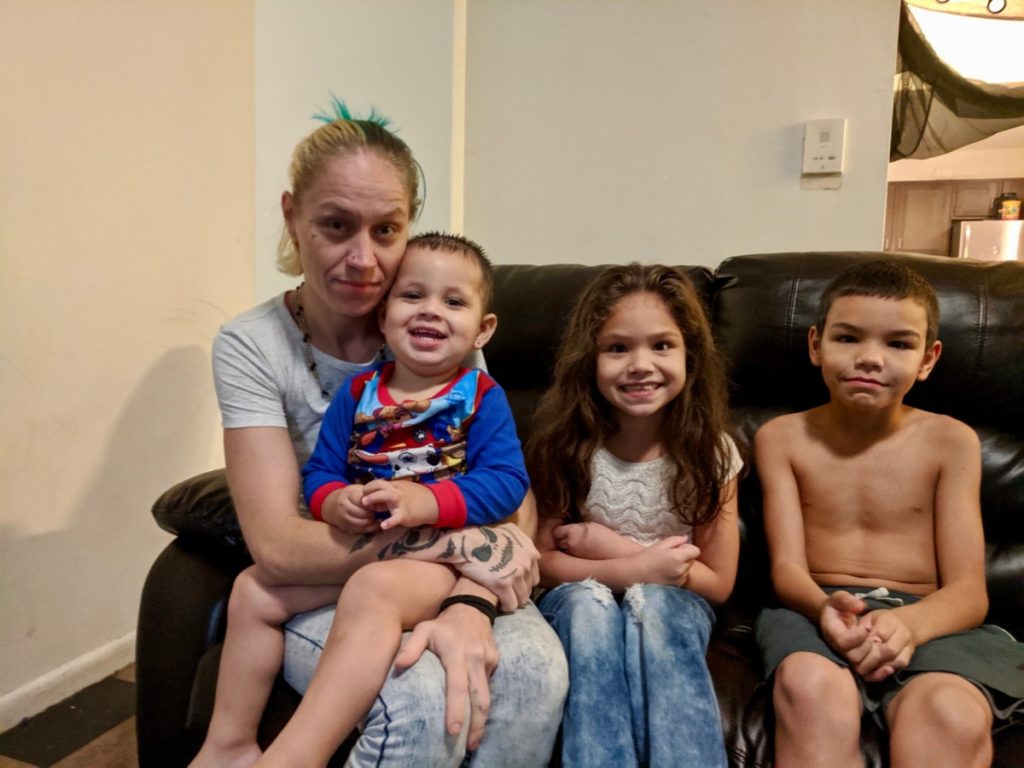
Laura Collar fidgeted in place outside the fourth-floor courtroom in the Bronx Housing court on a Friday morning in September. The 34-year-old tenant waited to inform her landlord’s lawyer that she’d been granted another 12 days extension before they evict her from the Morris Heights apartment in the West Bronx where she lives with her five children.
A row of piercings protruded from Collars furrowed brow as she thought about what to do next. She had just 12 days to figure out why the New York City Human Resources Administration (HRA) had stopped paying her rent. Twelve days to figure out where she and her children would go if she could not convince the city agency to start paying again.
“HRA approved my case,” Collar said, digging through the mound of paperwork and documents in her tattooed arms that she has accumulated throughout her case. “How am I supposed to make sure they are paying?”
Her apartment is one of those currently subsidized by a city program called the Family Eviction Prevention Supplement (CITYFEPS). The program was created in 2014 to help families in homeless shelters move into permanent housing or low-income families facing eviction avoid becoming homeless.
HRA agrees to pay a substantial portion of the family’s monthly rent — $1,560 in Collar’s case — as long as the family continues to qualify for the program. However, families frequently struggle to find appropriate housing even with this supplement. CITYFEPS is currently being rolled over into the new Family Housing and Eviction Prevention Supplement (CityFHEPS) program, which combines a number of rental subsidy programs into a single program.
The program, designed to keep families off the street, is now the cause of some evictions. When Collar’s landlord filed paperwork to evict her in July, HRA was over $6,000 behind on its share of Collar’s rent. Court records also show that the agency failed to make any payments in August and September.
This wouldn’t be the first time that Collar was evicted from the four-bedroom, three-bath, apartment because of an HRA mix-up. In October last year, she lost the apartment for a month when HRA fell over $16,000 behind on her rent, according to court documents. HRA had been sending checks to the wrong management company, and by the time the agency resolved the issue, Collar’s landlord had moved forward with the eviction.
Having been told that the case should be resolved in a week, Collar and her children moved into her mother’s Staten Island house, where nearly 20 family members shared five bedrooms. It wasn’t until November of that year that the family moved back into their apartment.
“It was traumatic,” Collar said. “We were cramped up in the house and [my children] missed school.”
But, if it’s HRA who failed to pay, why evict Collar? Because landlords have no other option to recuperate their rent, said an attorney who asked that his name not be used to avoid unfavorable treatment from HRA in future cases.
“This court has no jurisdiction on city payments,” explained the attorney, who has 23 years of experience in housing court. Unlike the federal housing voucher system called Section 8, the city does not appear as a third-party on the lease under programs like CITYFEPS, meaning that landlords have no legal recourse against the city.
A tenant can theoretically do everything right, but if HRA makes a mistake or is late to process paperwork, the landlord’s only option is to file for eviction and let the tenant deal with HRA.
The burden of managing her own case makes it impossible for Collar to lead a normal life. She keeps a binder full of documents related to the various programs she relies on, and spends multiple days a week in the HRA office.
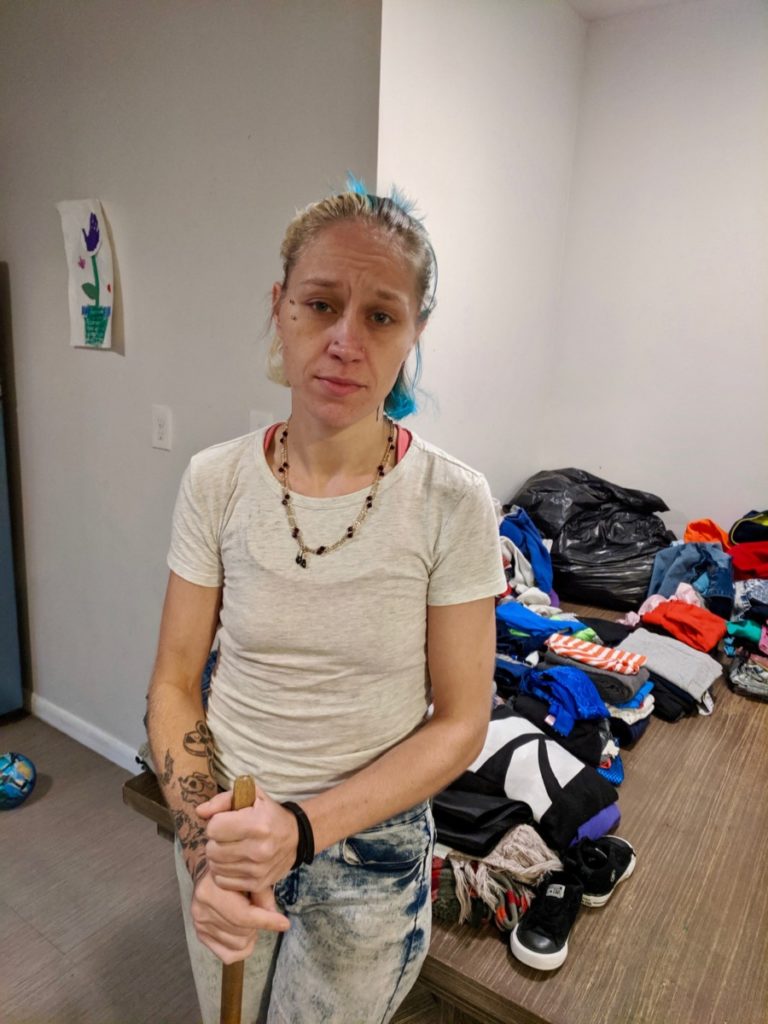
Collar folding her children’s clothes.
“I could make a house in there,”Collar said, referring to Bronx Housing Court. “I go every day. I’m not used to this, I never had to depend of welfare before (moving to New York City). It’s just crazy.”
Twelve days after her extension Collar was due back in court. However, she still had no answers from the city.
“I don’t know what is going to happen to me,” Collar said in a phone interview. “ I don’t have proof that (HRA) is going to pay…. They’re trying to put two and two together, but they’re at a standstill.”
Meanwhile, Collar’s case moves on. Her last-ditch attempt to get answers in person from HRA meant she missed her day in court. Normally, Collar would have defaulted and she would have lost her motion. The stay of eviction proceedings would have been lifted and the marshall would have proceeded with the eviction.
However, it was the first day of Rosh Hashana and Collar got lucky. Because of the holiday, the court decided to forgive no-shows and simply pushed her case back another 15 days.
Fifteen days for Collar to find answers. Fifteen days for her to make plans if not.